PIOCELAN is a unique foamed resin that has a highly optimized combination of polystyrene and polyolefin properties. Since its development half a century ago, PIOCELAN has been expanding into fields that were previously unimaginable due to its unique features, combined with the needs of our customers and technical capabilities of Sekisui Kasei.
Here is an introduction to the fields in which PIOCELAN is particularly active.


Low fuel consumption, light weight, safety performance, and low environmental impact ...... Modern cars, which are constantly required to have the highest standards of performance, are at the forefront of technological innovation.
In the automobile industry, PIOCELAN has been adopted by all eight major Japanese automobile manufacturers as an internal constituent member of vehicles.
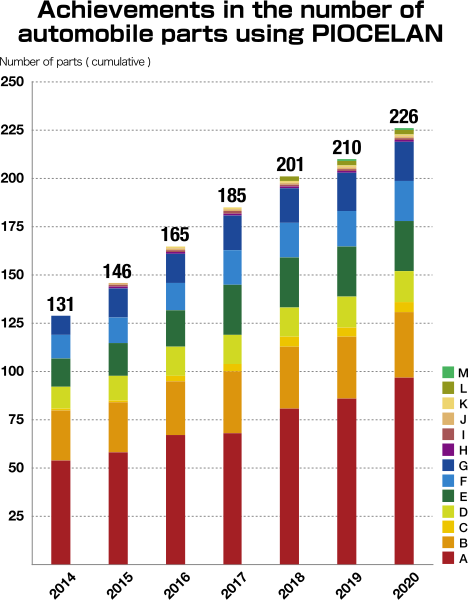
Since 2001, there has been a rapid expansion in the adoption of PIOCELAN by Japanese automobile manufacturers.
Since 2006, PIOCELAN has been adopted by all eight major Japanese automobile manufacturers.
Since 2010, manufacturers all over the world have been adopting or considering adopting PIOCELAN.
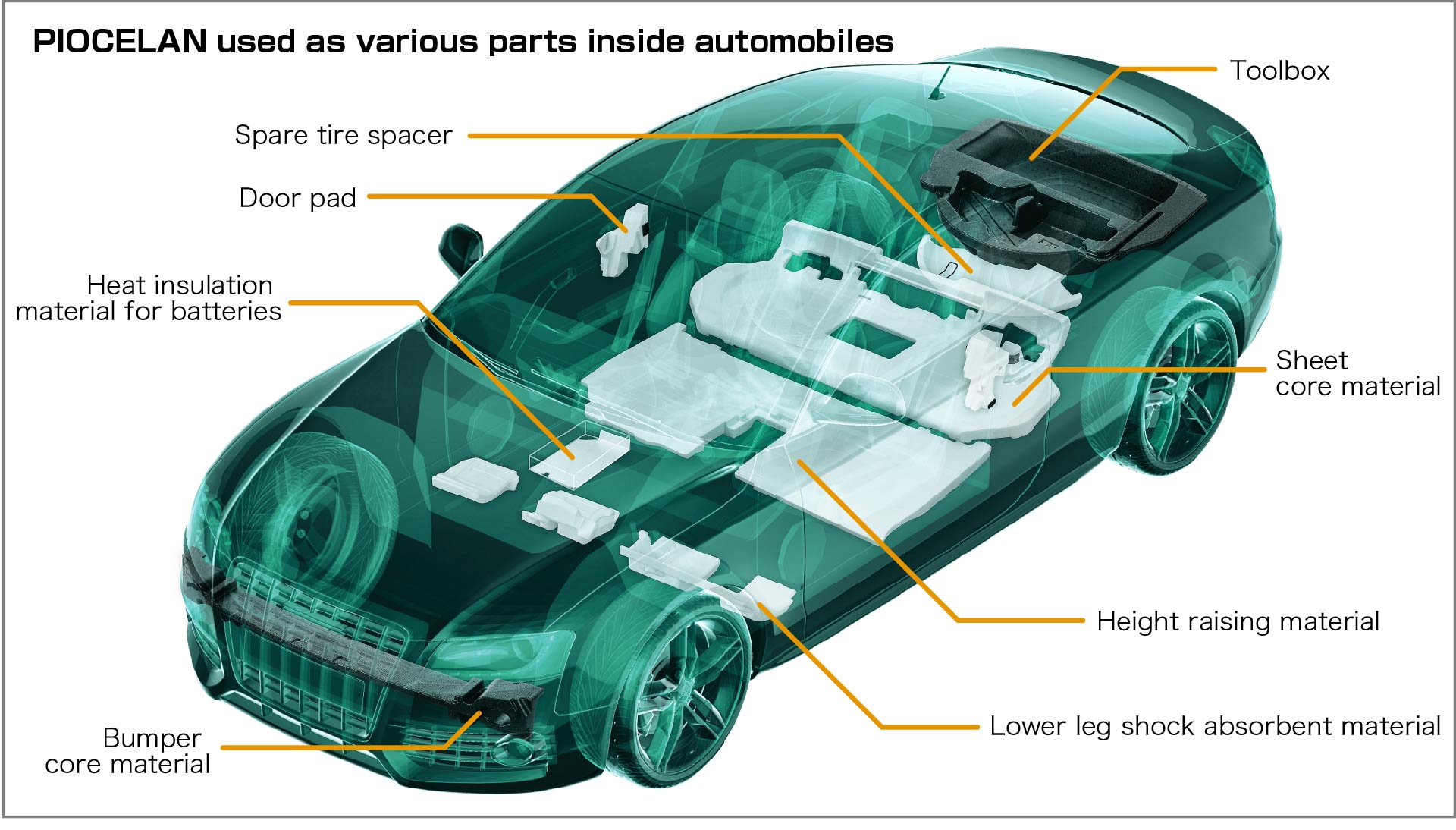
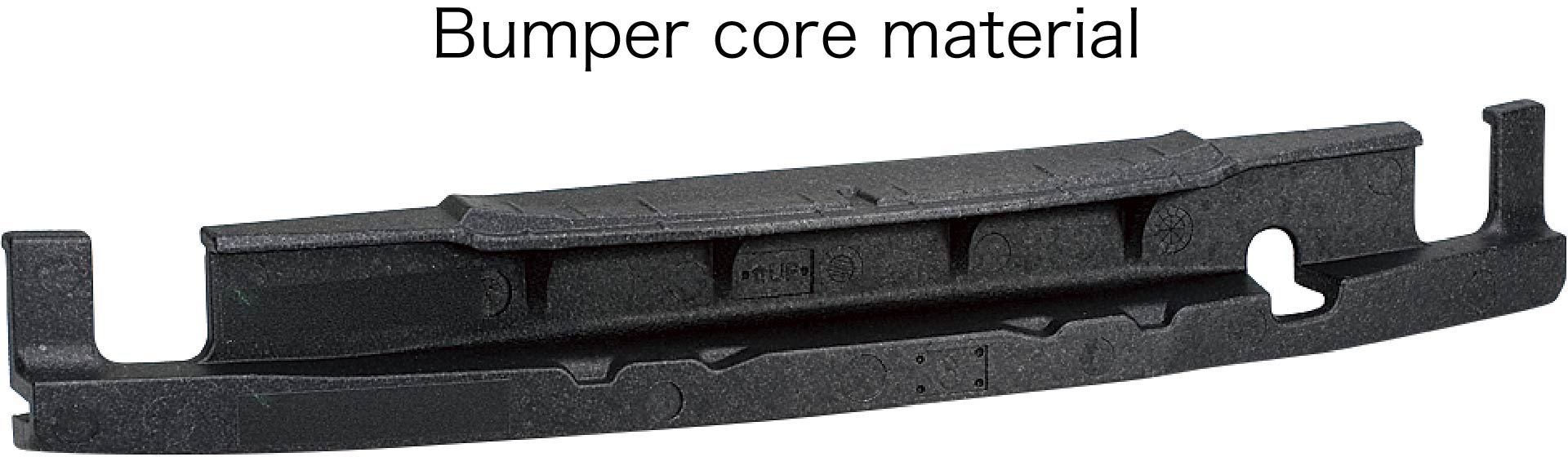
PIOCELAN is now used in various applications, including collision safety applications such as bumper core material and lower leg shock absorbent material, vibration absorption applications such as spare tire spacers and floor spacers, and thermal insulation applications such as console boxes and battery insulators. Here is an introduction to what properties of PIOCELAN are being utilized.


Beneath the vehicle’s floor carpet—an area rarely seen by drivers or passengers—engineering challenges are becoming more complex than ever before. In addition to the widespread adoption of hybrid vehicles, next-generation battery electric vehicles (BEVs *1) are being designed with batteries covering much of the underfloor area. As a result, the space available for interior components is being reduced to its limits. This challenge goes beyond the traditional pursuit of simply saving every possible gram of weight. Today’s engineers must solve a far more demanding puzzle: how to fit every component within an increasingly constrained space while meeting higher standards for safety, comfort, and performance.
Meeting the performance requirements specified in the design drawings is the starting point. From there, the real challenge is determining how to make the structure thinner and lighter. That is where our engineering expertise truly comes into play.
According to one of our engineers who has spent years designing PIOCELAN-based components, innovation continues to reshape automotive floor applications. In this article, we explore three key PIOCELAN components used beneath the vehicle floor and take a closer look at the latest engineering trends driving their evolution.


A lower-leg impact absorber is used around the driver's footwell and footrest area. In the event of a collision, it serves as a critical safety component designed to protect the driver's lower legs from impact forces.
What matters for this component is not simply strength. If it is too rigid, impact forces can be transmitted back to the occupant, potentially increasing the risk of injury. On the other hand, if it is too soft, it may bottom out and fail to provide adequate protection. The key is achieving controlled deformation that efficiently absorbs impact energy (EA: Energy Absorption *2).
PIOCELAN is a hybrid foam material that combines the rigidity of polystyrene with the toughness and ductility of polyolefin. Thanks to its unique toughness, it resists brittle fracture even in thin-wall designs, absorbing impact through controlled, gradual deformation.
A closer look at the backside of the component reveals a complex network of ribs and reinforcing structures engineered into the design.
Our approach is not simply to maximize strength. Certain areas are deliberately designed to deform first, allowing the collapse sequence to be carefully controlled during an impact. Through repeated real-world testing, we refine the geometry to maximize occupant protection within highly constrained packaging space.


A floor spacer is a large component installed beneath the floor carpet to create a flat cabin floor surface. While it may appear to be a simple gap filler, it incorporates technologies designed to enhance passenger comfort and perceived quality.
For example, the structure must withstand highly concentrated loads, such as those generated by high-heeled shoes when entering the vehicle. PIOCELAN provides the rigidity required to resist these concentrated loads without compromising performance. Unlike soft, cushion-like materials, it delivers a firm and refined underfoot feel that contributes to a premium cabin experience.
Despite its large size, the component is remarkably lightweight, helping reduce overall vehicle weight.
Large components are essential for filling the complex uneven surfaces beneath the vehicle floor and creating a wide, flat cabin floor. Taking advantage of PIOCELAN’s lightweight characteristics and design flexibility, these molded components help create comfortable interior spaces while minimizing the weight increase typically associated with large-scale parts.
Dimensional accuracy is particularly important for this component. PIOCELAN offers a significant advantage thanks to its low post-molding shrinkage, enabling precise conformity to the floor’s complex geometry. In EPP molding, parts are typically manufactured oversized to compensate for post-molding shrinkage and require an additional high-temperature conditioning process. PIOCELAN can significantly reduce or even eliminate this process, contributing to greater manufacturing efficiency.


PIOCELAN is also used as a seat core material beneath rear-seat cushions, offering unique advantages that differentiate it from conventional materials. One of its key benefits is helping to prevent the “submarining” phenomenon.
Submarining occurs when an occupant’s body slides forward beneath the seat belt during a collision. With seats made solely of soft urethane foam, excessive sinking can increase the risk of this occurring. By incorporating a PIOCELAN core with optimized rigidity, excessive seat deformation can be reduced, helping maintain proper occupant posture and improve protection during an impact.
Urethane foam tends to lose its shape over time, whereas PIOCELAN offers excellent dimensional stability. Its long-term durability helps maintain consistent seating comfort throughout the vehicle’s service life. By reducing the amount of urethane required, it contributes to both weight reduction and cost savings.
PIOCELAN can also be integrated with urethane through one-piece molding, providing stable bonding strength through enhanced adhesion performance. While addressing the durability issues commonly associated with all-urethane seat structures, it enables simultaneous weight reduction and cost optimization through lower material consumption, driving broader adoption across vehicle applications.


While EPP is also widely used as a lightweight material, one of the key reasons engineers choose PIOCELAN is its superior dimensional stability.
EPP naturally shrinks after molding, requiring a high-temperature conditioning process after demolding to restore the intended dimensions. In contrast, PIOCELAN exhibits extremely low shrinkage, enabling parts to achieve precise dimensions directly from the mold.
This characteristic is essential for achieving a precise fit within the complex geometries found in modern vehicle floor structures. EPS materials often require extended stabilization periods after molding before final dimensions can be achieved. Compared with EPP, which requires energy-intensive conditioning, PIOCELAN helps reduce manufacturing costs and energy consumption—an important advantage in the era of decarbonization.
EPP parts typically leave the mold in a slightly shrunken state and require an aging process lasting from several hours to several days before reaching their final dimensions. Because PIOCELAN can significantly shorten or even eliminate this process, it offers advantages in both production lead time and overall manufacturing cost.


Driving the next generation of mobility, PIOCELAN 2.0 is attracting growing attention.
Traditionally, foam materials faced an unavoidable challenge: increasing the expansion ratio to achieve lighter weight often resulted in reduced flame resistance. With conventional PIOCELAN, meeting the FMVSS No.302 flammability requirements for automotive interior materials was generally limited to expansion ratios of around 30 times. Higher expansion ratios made compliance increasingly difficult.
PIOCELAN 2.0 has successfully overcome this limitation.
PIOCELAN 2.0 achieves FMVSS No.302 compliance even at high expansion ratios of 35x, 40x, and even 45x—performance that was previously unattainable with conventional materials.
In addition, Sekisui’s proprietary material design, including optimized formulation technology, delivers higher stiffness than conventional PIOCELAN grades.
PIOCELAN 2.0 achieves an exceptional balance of lightweight performance and structural strength. While maintaining safety and comfort, it enables approximately 10-25% weight reduction compared with EPP.
In next-generation BEVs, where batteries are expected to cover much of the underfloor area, lightweighting becomes increasingly important to offset the added battery weight. In addition, because BEVs cannot utilize engine waste heat for cabin heating, thermal efficiency becomes a critical challenge. PIOCELAN’s excellent thermal insulation properties can contribute significantly to cabin thermal management.
This ability to maintain flame resistance even at high expansion ratios opens up new possibilities for vehicle design. For engineers striving to balance safety requirements with aggressive lightweighting targets, this characteristic provides a significantly broader range of design options.


When customers ask, “This undercut geometry can’t be molded, can it?” that is where our engineering expertise truly comes into play. By optimizing mold release directions and redesigning parting lines, we can achieve challenging geometries without relying on complex slide mechanisms. We do not see ourselves as simply a material supplier—we strive to be a trusted engineering partner.
PIOCELAN continues to support the fundamental functions of every vehicle—driving, handling, and braking—from places that remain unseen. Its evolution reflects the evolution of future mobility itself.

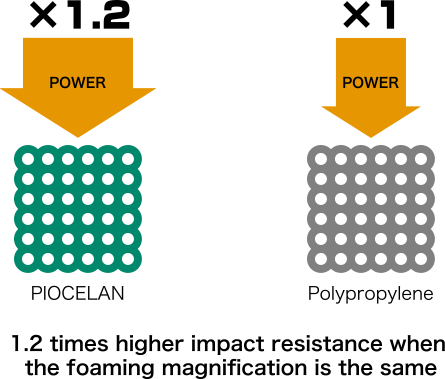
PIOCELAN, which exhibits 1.1 times higher impact resistance when compared to expanded polypropylene at the same foaming magnification, contributes to a car's crucial collision safety performance and vibration absorption.
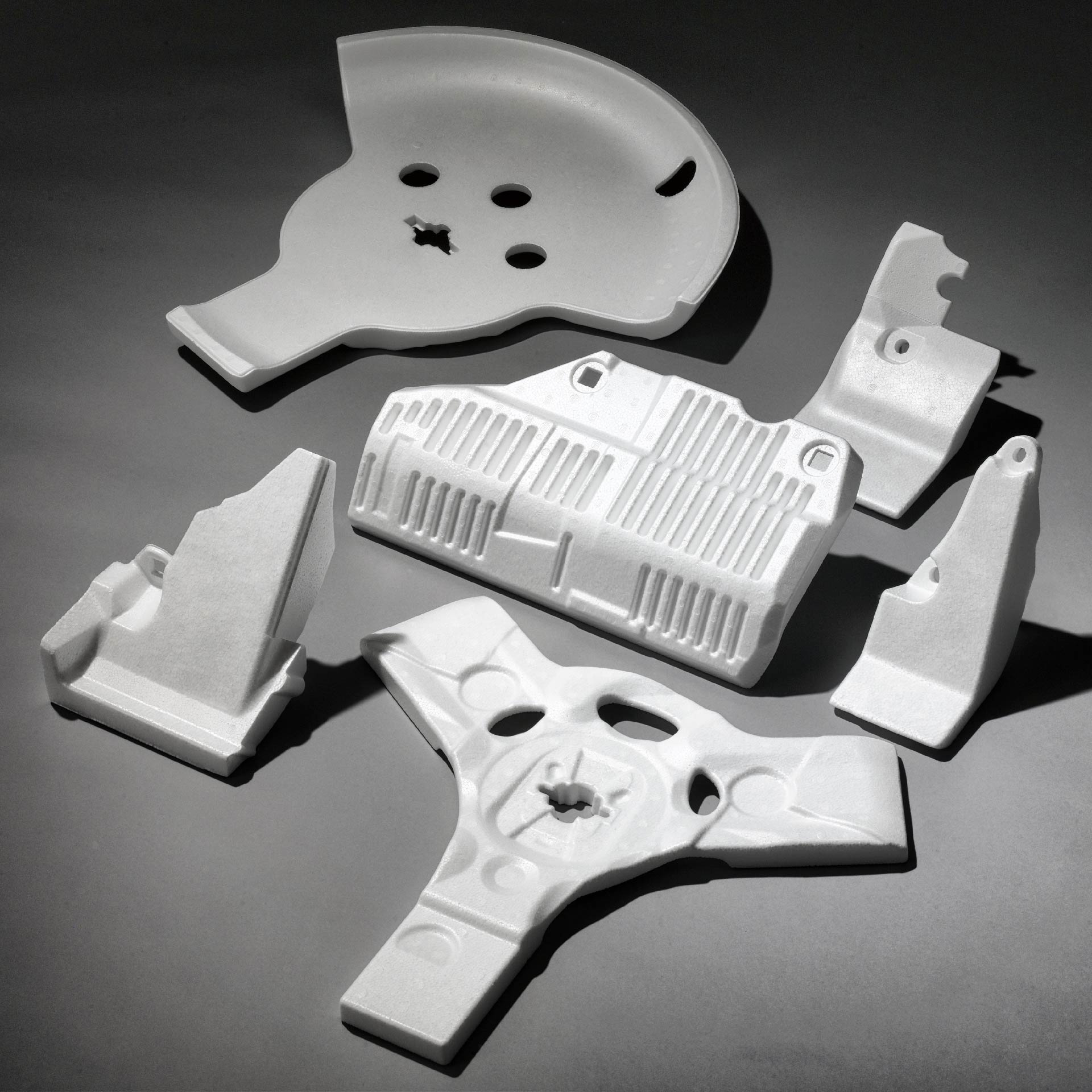
The accuracy of clearance between parts is important in a car that is a collection of tens of thousands of parts.
Since PIOCELAN has excellent dimensional stability during molding and can accommodate complex designs, we provide parts that fit perfectly into place.
Fitting perfectly and absorbing shocks play a role in the reduction of chattering and creaking noises during driving.
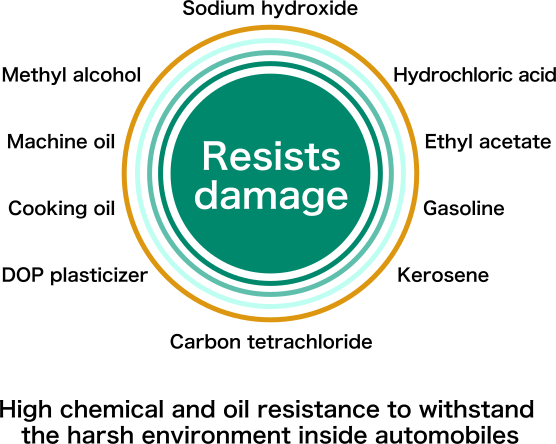
Chemical and oil resistance between peripheral parts is an important factor in maintaining the performance of ultra-durable products for a car that is made by combining various materials such as steel, aluminum, glass, plastic, carbon fiber, leather, fabric, and rubber.
The high chemical and oil resistance of PIOCELAN allows it to maintain its performance for a long time without being affected by peripheral parts.
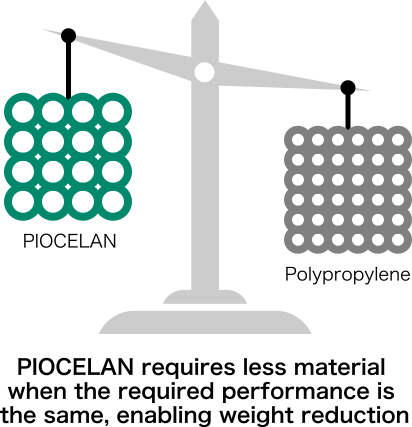
The enhancement of safety performance, driving performance, and comfort and the reduction of fuel consumption are conflicting requirements from the perspective of vehicle weight. Therefore, modern car development has focused on reducing the weight by one gram.
PIOCELAN uses less material than polypropylene when making a molded product with the same rigidity as a molded product using conventional polypropylene. In other words, PIOCELAN can produce parts with the required performance using less material, which contributes to weight reduction.
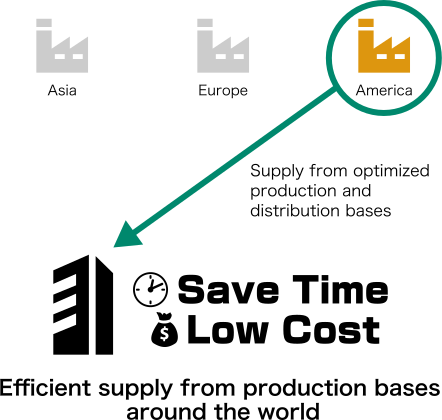
PIOCELAN is manufactured using Sekisui Kasei's proprietary polymer hybrid technology, and one of its key features is that it can be molded and processed using conventional equipment.
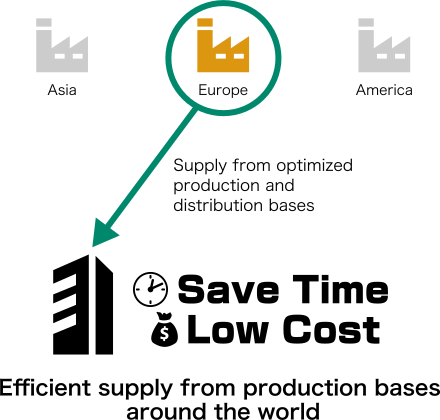
In addition to its lightweighting benefits, Sekisui Kasei has established a highly efficient global supply system by delivering products from the production site closest to each customer among its worldwide manufacturing network. This helps minimize material costs, logistics costs, and lead time, providing an efficient and cost-effective supply chain.


Automobile production is supported by large-scale logistics operations that deliver tens of thousands of components to assembly plants. From heavy parts to precision components such as EV batteries and electronic control units, ensuring the safe and efficient transportation of a wide variety of parts is essential.
PIOCELAN is a foamed material with excellent cushioning performance and durability, widely used for returnable containers and cushioning materials for automotive parts transportation. Despite its thin-wall design, PIOCELAN achieves high rigidity, improving packing efficiency and helping reduce logistics costs. Its durability for repeated use also contributes to resource conservation.
In knock-down (KD) packaging applications, structurally optimized designs provide superior load distribution and part retention, minimizing shifting and tipping during transportation. High stability is maintained even in multi-level stacking and long-distance transport, reducing the risk of part damage while improving overall logistics efficiency. Packaging designs can be tailored to the shape, weight, and logistics conditions of each part, allowing optimized KD packaging specifications to be proposed on an individual basis.
In addition, the lineup includes PIOCELAN RNW, which contains 15% or more recycled materials and embodies the principles of the 3Rs—Reduce, Reuse, and Recycle. We are actively promoting its adoption in returnable logistics materials to further support sustainable manufacturing and distribution.
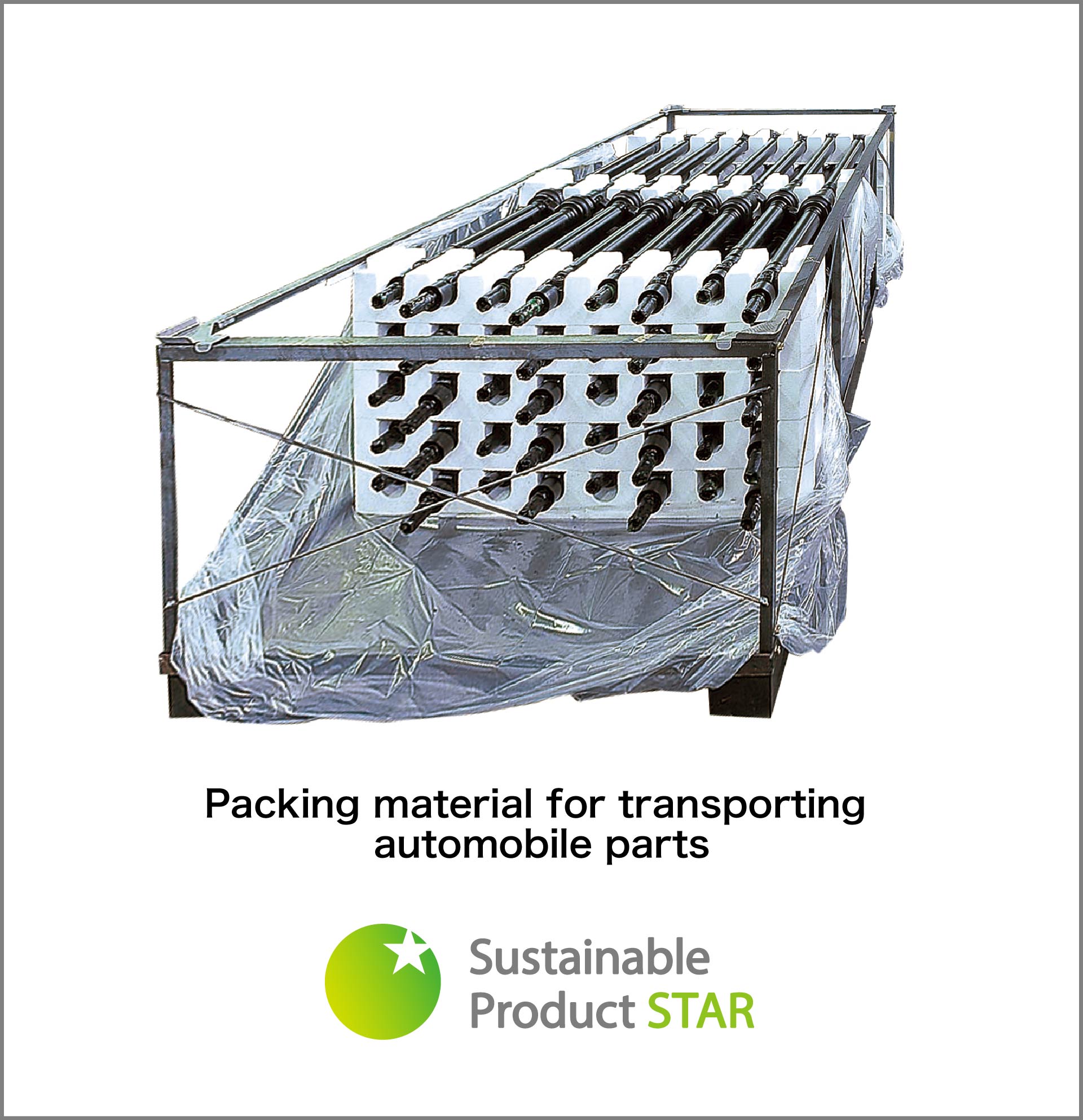
The Sekisui Kasei Group has certified "packing materials for transporting automobile parts" and "containers for transporting flat-screen TV glass and panels", which are molded products using PIOCELAN, as "sustainable star products" (environmentally friendly products) *.
Certification criteria established as part of the action plan "SKG-5R" to realize the "contribution to a sustainable society" set forth by the Sekisui Kasei Group (SKG). We internally certify products that reduce environmental impact and take into consideration limited resources as "Sustainable Products", and products that have a particularly high degree of contribution to the environment as "sustainable star products" (environmentally friendly products), thereby promoting their creation and market expansion.
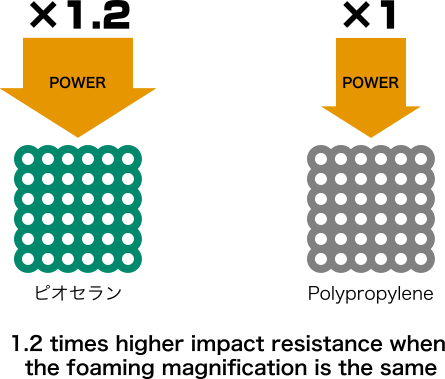
When transporting heavy metal parts or delicate electronic components, there is always a risk of product damage or malfunction due to vibrations during truck transportation or impact from drops during handling.
Compared at the same expansion ratio as expanded polypropylene, PIOCELAN delivers 1.1 times higher impact resistance. Its excellent energy absorption performance firmly protects critical and safety-related internal components from external shocks and vibrations. In addition, the inherent flexibility of foamed materials helps prevent surface abrasion and scratches on parts, contributing to the preservation of product quality.
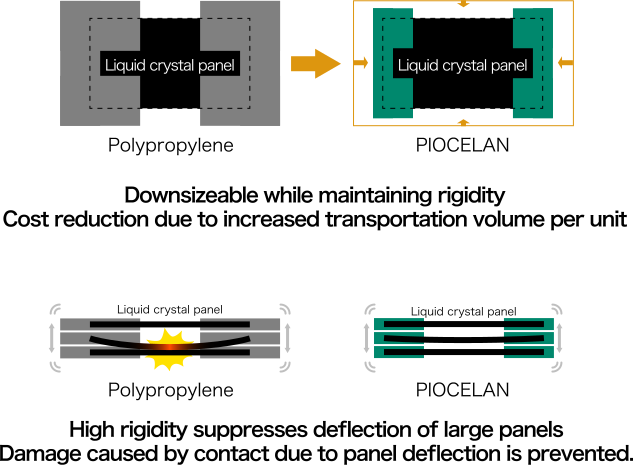
In automotive logistics, where large volumes of parts are transported at once, container loading efficiency has a direct impact on overall costs.
By combining the high rigidity and dimensional stability of PIOCELAN, it is possible to design thinner packaging compared with conventional materials while maintaining sufficient strength to withstand stacking. This increases the number of parts that can be packed per container, contributing to a reduction in the number of shipments and a decrease in logistics-related CO₂ emissions.
Furthermore, as production lines become increasingly automated, high precision in robotic part picking is required. Thanks to its excellent dimensional stability and minimal deformation even after long-term use, PIOCELAN is also adopted as a tray material with high compatibility for automated equipment.

Moving away from single-use (one-way) logistics materials is an urgent issue in achieving a sustainable society. The strength of PIOCELAN lies in its durability and returnability. While conventional foamed materials tend to sag or crack under repeated impacts and loads, PIOCELAN maintains excellent resilience and impact resistance over long periods through its proprietary hybrid technology combining polyolefin and polystyrene resins.
This high level of durability enables a transition from one-way packaging materials to reusable returnable containers. Although packaging costs require an initial investment, the cost per use is significantly reduced as the number of reuse cycles increases, directly contributing to long-term reductions in total logistics costs.

The performance of packaging materials is not determined by the material alone. Their value is greatly influenced by design considerations that take into account part specifications, logistics conditions, and operational requirements.
PIOCELAN is a material that achieves a high-level balance of rigidity, dimensional stability, and impact resistance through proprietary polymer hybrid technology. To fully leverage these characteristics, we offer not only the material itself but also comprehensive support that includes packaging design. With a deep understanding of material properties, we are able to develop packaging solutions that balance performance, durability, and workability according to specific applications and conditions. Drawing on our extensive experience in design development, particularly in the automotive parts field, we provide packaging proposals that are optimized for actual operational use.
“Given these conditions, what kind of packaging is possible?” We encourage you to start by discussing the design concept with us—please feel free to contact us for consultation.
PIOCELAN is manufactured using Sekisui Kasei's proprietary polymer hybrid technology, and one of its key features is that it can be molded and processed using conventional equipment.
In addition to its lightweighting benefits, Sekisui Kasei has established a highly efficient global supply system by delivering products from the production site closest to each customer among its worldwide manufacturing network. This helps minimize material costs, logistics costs, and lead time, providing an efficient and cost-effective supply chain.
Please feel free to contact us
should you have any comments or questions.